
November 10, 2026
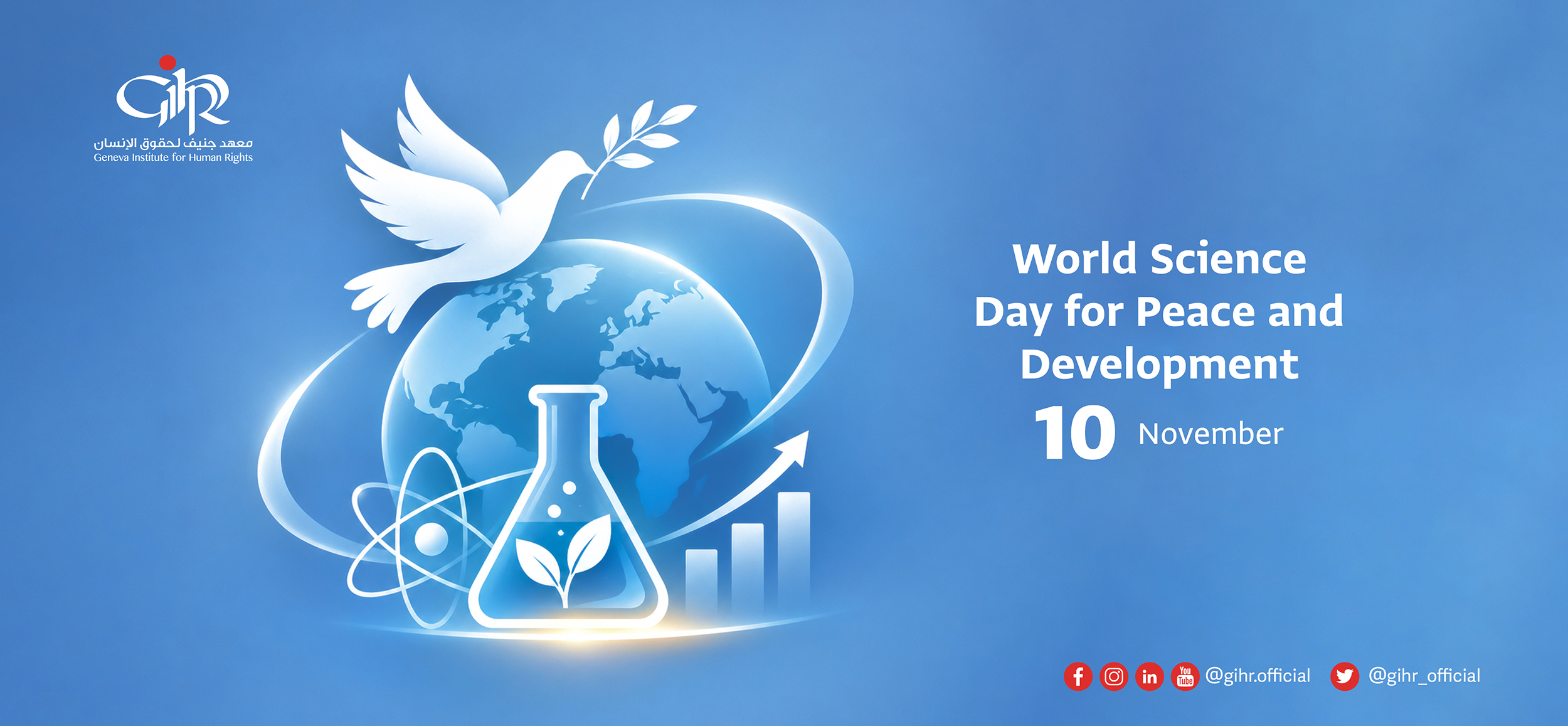
On November 10th of each year, the world celebrates World Science Day for Peace and Development—an occasion that reminds us of the role science plays in improving human life, addressing the challenges faced by societies, and opening new horizons toward a more stable and equitable future. It also serves as an opportunity to underscore the importance of making knowledge accessible to all, and ensuring that scientific progress serves humanity and upholds human dignity.
Science is more than just discoveries and theories studied in universities and research centers; it is an integral part of our daily lives, with a direct impact on health, education, the environment, and development. Through scientific research and the exchange of knowledge, societies can find solutions to numerous problems, improve essential services, and confront crises that affect people’s lives. Furthermore, providing everyone with the opportunity to learn and benefit from knowledge helps to narrow gaps and promote equal opportunity.
Despite the scientific and technological progress the world has achieved, challenges remain regarding unequal access to education, scientific research, and modern technologies. In many societies, researchers and students face a lack of resources and opportunities, while conflicts and crises deprive vast regions of the benefits of scientific advancement. Moreover, certain modern technological applications raise questions concerning privacy and human rights—particularly when they are deployed without safeguards to ensure the protection of individuals and societies.
The Geneva Institute for Human Rights asserts that science and knowledge must serve humanity, and that benefiting from scientific progress is a crucial component of the right to enjoy the advantages of such progress and its applications. This entails supporting scientific research, ensuring equal access to education, fostering cooperation among scientific institutions, and guaranteeing that technology is used responsibly—in a manner that respects human rights and fundamental freedoms.
Science also plays a vital role in promoting peace by encouraging dialogue and cooperation between peoples, and by facilitating the exchange of expertise and knowledge, transcending disputes and conflicts. Scientific collaboration creates common ground for engagement between nations and societies, helping to address challenges that no single state can tackle alone—such as climate change, pandemics, resource scarcity, and environmental crises.
On the occasion of the World Science Day for Peace and Development, the Geneva Institute for Human Rights calls for increased investment in education and scientific research, broader access to knowledge, and greater support for scientists and researchers. It urges that scientific and technological progress be directed toward serving societies and improving human lives, while ensuring that human rights are upheld at every stage of scientific development.
The value of science is not limited to the discoveries and inventions it yields; its true significance lies in its capacity to improve human life and create new opportunities. When knowledge is made accessible to all, and science is harnessed in the service of peace and development, it becomes a powerful tool for building societies that respect the individual and provide everyone with a better chance to live with dignity and security.