
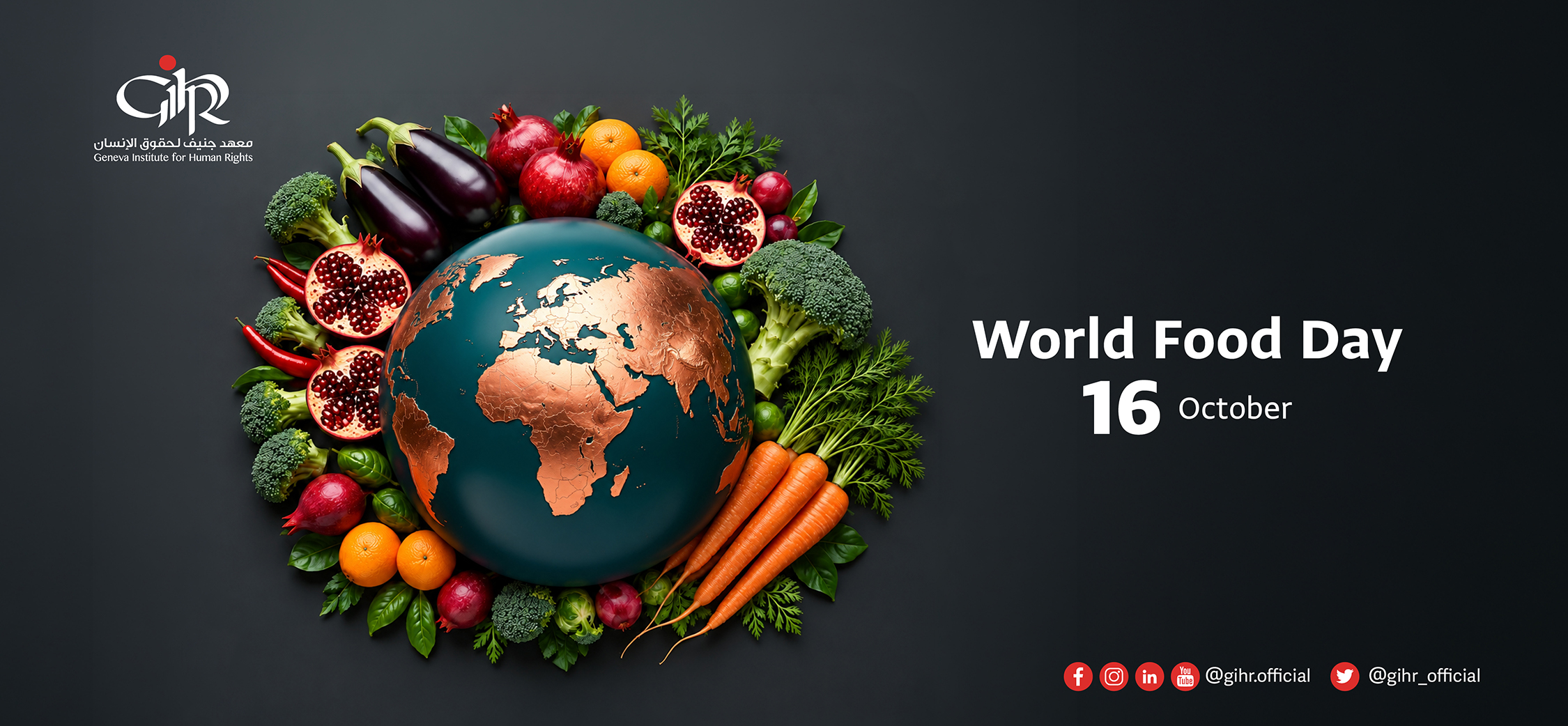
October 16, 2026
Every year on October 16, the world observes World Food Day—a reminder that food is not merely a daily necessity, but a fundamental human right, inextricably linked to human dignity, health, and the ability to live in safety. While many begin their day contemplating what they will eat, others are preoccupied with a far more difficult question: will they find enough to feed their families today?
Access to sufficient and safe food is a right for every human being; it should not be contingent upon one’s economic circumstances or place of residence. Yet, many families continue to struggle to meet their basic needs, compounded by rising costs of living, poverty, conflict, and climate crises that disrupt food production and availability. In such conditions, children, women, and the most vulnerable groups bear a disproportionate burden; parents may even be forced to go without food themselves so that their children might have enough to eat.
The Geneva Institute for Human Rights emphasizes that combating hunger goes beyond providing food during times of crisis; it requires addressing the root causes that prevent people from accessing food on a consistent basis.
This includes reducing poverty, supporting small-scale farmers, improving livelihoods, ensuring equitable access to food resources, and strengthening the resilience of communities to withstand crises that threaten their food security. Achieving food security is closely linked to protecting the environment, using natural resources responsibly, reducing food waste, and supporting sustainable agricultural practices.
The food that reaches our tables is the result of significant effort by farmers and those involved in its production, transport, and distribution; it is essential that these efforts are valued and that workers in this sector are provided with fair and safe working conditions.
On World Food Day, the Geneva Institute for Human Rights calls for intensified efforts to ensure that everyone has access to sufficient, safe, and nutritious food. Particular attention must be given to families living in poverty, those affected by conflicts and humanitarian crises, and anyone struggling to secure their basic needs.
No person should ever have to go to sleep hungry, and no child should have to live in anxiety about their next meal. Ensuring the right to food is a shared responsibility—one that begins with the recognition that every human being has a right to a life of dignity. Addressing hunger is not merely a humanitarian issue; it is a fundamental duty to protect human rights and uphold human dignity.