
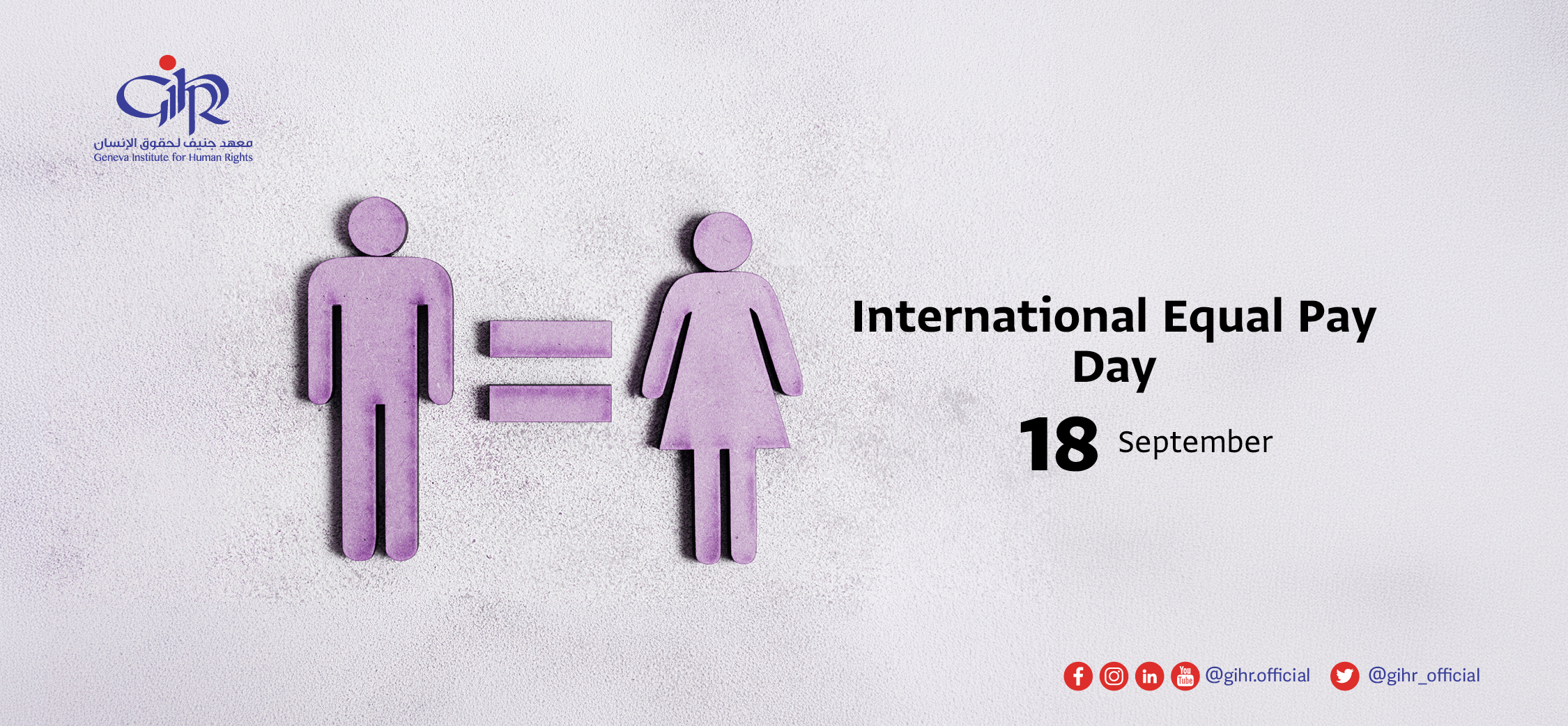
Every year on 18 September, the world stands before an urgent human rights imperative that cannot be postponed: International Equal Pay Day; a day that reminds us that justice in the workplace cannot be complete unless women and men receive equal pay for work of equal value, without discrimination.
Equal pay is not a grant from an employer, nor a privilege bestowed by institutions, nor a slogan for an annual celebration; it is an inherent human right and an established principle in the international labour framework, affirmed by International Labour Organization Convention No. 100 concerning Equal Remuneration for Men and Women Workers for Work of Equal Value.
Yet, after decades of legislation, charters, international conventions and promises, women around the world continue, on average, to earn less than men.
The United Nations and the International Labour Organization estimate the global gender pay gap at around 20 per cent, while the Organisation for Economic Co-operation and Development confirms that the pay gap persists in all OECD countries, despite decades of policies aimed at reducing it.
If the international community has succeeded in establishing the principle, the real challenge today lies in moving from recognition to implementation, from texts to reality, and from moral commitment to effective accountability.
How can a world that speaks so much about equality, women’s empowerment and human rights accept the continued disparity in pay between a woman and a man performing work of equal value?
Hence, the defence of women’s rights should not be selective, nor should it stop at the boundaries of geography or political discourse.
At the same time, it is important to look at Arab and Islamic experiences away from stereotypes and ready-made generalisations. Many Arab countries have taken legislative and policy measures to promote the principle of equal pay for work of equal value.
On International Equal Pay Day, the Geneva Institute for Human Rights renews its commitment to defending equality and non-discrimination, promoting the right to decent work, and calls on governments, employers, workers’ organisations, civil society and international institutions to make equal pay a measurable reality, rather than merely a written principle, and to strengthen mechanisms of oversight and accountability, and provide remedies for every woman or man who experiences discrimination in pay.
Equal pay is not an economic luxury, nor a seasonal demand, nor a slogan for celebration; it is a human right and a foundation for achieving justice and dignity in the world of work.