
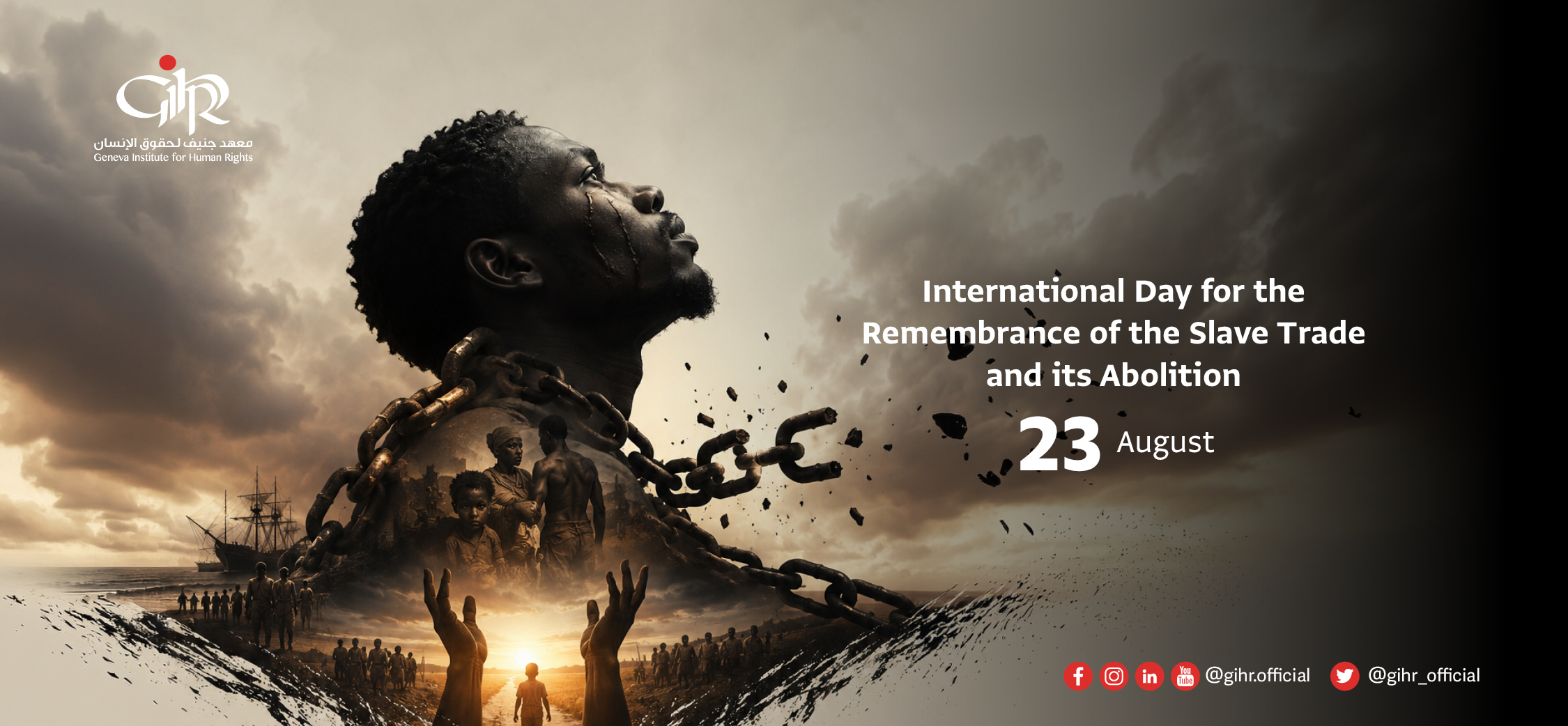
Every year on 23 August, the world marks the International Day for the Remembrance of the Slave Trade and Its Abolition, honoring the millions of people who suffered from slavery and human trafficking, and remembering the struggles of peoples who resisted these inhumane practices and worked to bring them to an end.
On this occasion, the Geneva Institute for Human Rights recalls the long history of the transatlantic slave trade and the profound human suffering it caused, including the loss of freedom and dignity, the forced separation of families and communities, exploitation, violence and discrimination. The Institute also recalls the uprising of enslaved people in Saint-Domingue, which began on 23 August 1791 and marked an important moment in the struggle against slavery.
This occasion reminds us that the abolition of slavery was not simply a legal change, but the result of long struggles and great sacrifices for freedom, dignity and equality. It also reminds us that the legacy of the slave trade and slavery continues to be reflected in different forms of discrimination, racism and inequality affecting many communities today.
The Institute affirms that human dignity, freedom and equality are inherent rights of every person, and that combating racism, discrimination and exploitation requires continued commitment from governments and the international community. It also stresses the importance of education and raising awareness of this history as essential tools for addressing hate speech and promoting a culture of human rights.
On this occasion, the Geneva Institute for Human Rights calls for continued efforts to combat all forms of slavery, exploitation and human trafficking, address the legacy of the past, promote equality and justice, and ensure that violations that undermine human dignity and freedom are not repeated.
The Institute honors the memory of all victims of the slave trade and slavery and remembers the struggles of those who resisted enslavement and fought for liberation. It reaffirms its commitment to promoting the principles of freedom, dignity and equality and rejecting all forms of discrimination.
In a world where the legacy of historical injustice remains present, confronting the past is an essential step toward building a more just future. Respect for human dignity and freedom remains a shared and indivisible responsibility.