
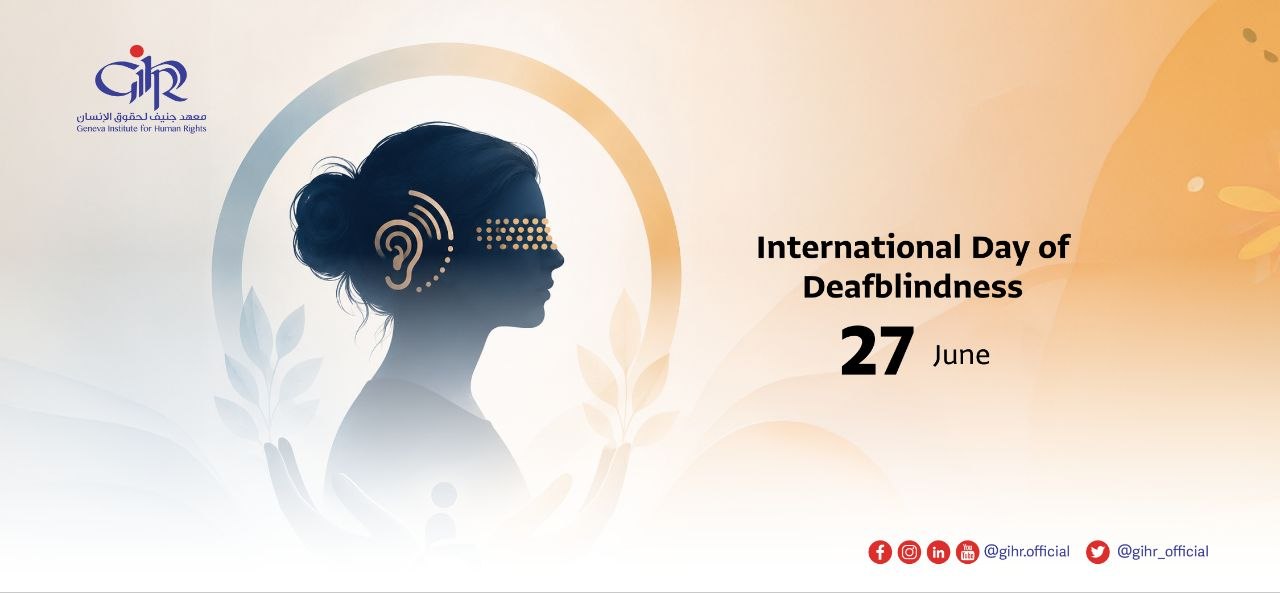
GIHR Statement on the International Day of Deafblindness
On the occasion of the International Day of Deafblindness, observed annually on 27 June, the Geneva Institute for Human Rights (GIHR) reaffirms its commitment to promoting and protecting the rights of persons with deafblindness. The Institute underscores the importance of recognizing deafblindness as a distinct disability that requires dedicated legislation, policies, and specialized services to ensure equality of rights and opportunities and to enable the full and effective participation of persons with deafblindness in all aspects of society.
This observance follows the United Nations General Assembly’s proclamation of 27 June as the International Day of Deafblindness, reaffirming the importance of recognizing deafblindness in national legislation, policies, and programmes, and ensuring that persons with deafblindness have access to the support and services necessary to promote their independence, safeguard their dignity, and facilitate their full inclusion in society.
GIHR emphasizes the essential role of professional deafblind interpreters and interpreter guides in enabling persons with deafblindness to access information, communicate with others, benefit from public services, and exercise their fundamental rights on an equal basis with others. The Institute also highlights the need to expand access to assistive technologies and strengthen specialized services that respond to the diverse needs of persons with deafblindness, thereby enhancing their independence and quality of life.
The International Day also pays tribute to the enduring legacy of Ms. Helen Keller (USA), whose remarkable life demonstrated that deafblindness is not a barrier to learning, achievement, or meaningful contribution to society. Her legacy reminds us that the real challenge lies in removing barriers and creating inclusive environments and equitable policies that enable every individual to realize their full potential.
On this occasion, GIHR renews its commitment to advocating for the rights of persons with deafblindness and to working with partners and relevant stakeholders to advance inclusion, promote equality and non-discrimination, and ensure that no one is denied their rights because of their disability.
True justice is measured by a society’s ability to ensure that everyone, without exception, can participate fully in a life of dignity, equality, and respect.