
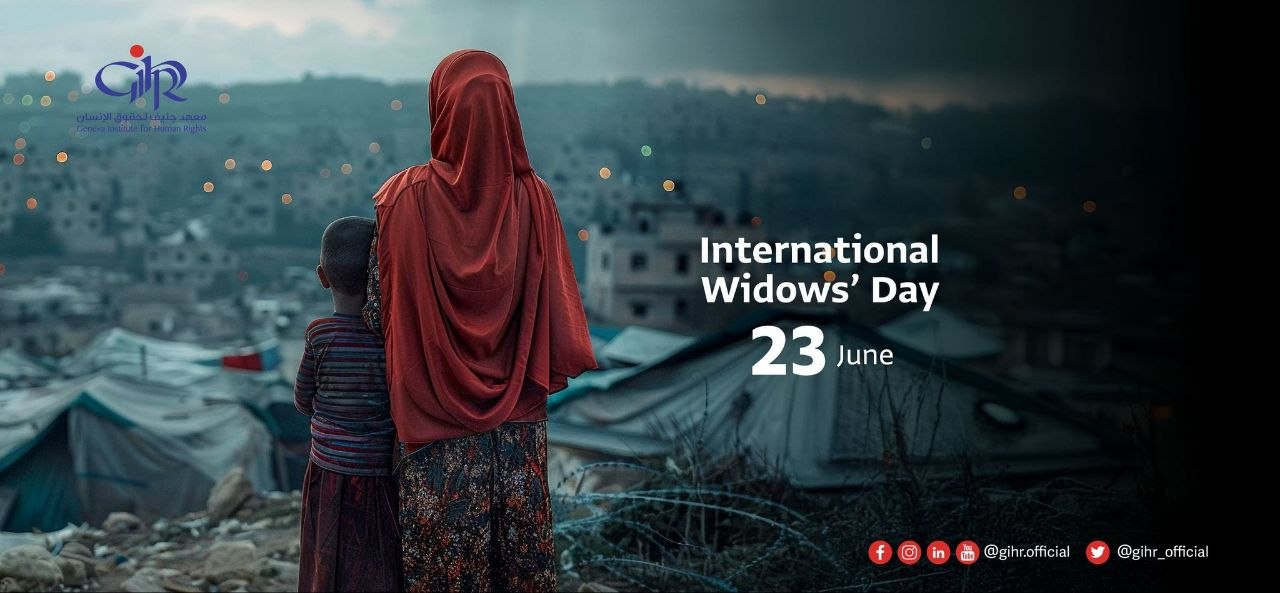
The Geneva Institute for Human Rights and Humanitarian Affairs marks International Widows’ Day, 23 June 2026, by reaffirming its commitment to the rights, dignity, and full legal protection of widows worldwide. Established by the United Nations General Assembly in 2010 through resolution A/RES/65/189, this day was created to draw attention to the voices and experiences of widows and to galvanize the support they need support that, for hundreds of millions of women, remains out of reach.
For many women around the world, the loss of a spouse is not only a profound personal loss it marks the beginning of a long struggle for basic rights and survival. Widows may be denied their inheritance and land rights, evicted from their homes, forced into unwanted remarriage, subjected to harmful practices, and stigmatized within their communities. Many of these violations go unreported. Some are treated as culturally acceptable.
An estimated 258 million widows live around the world, and nearly one in ten exists in extreme poverty. Without targeted legal and policy intervention, widows and their children risk being trapped in cycles of intergenerational deprivation. The situation is particularly acute in parts of South Asia, sub-Saharan Africa, and Latin America, where legal frameworks are weak and discriminatory practices deeply entrenched. Widows must be included in national policies on social protection, education, healthcare, and economic empowerment or the risk of intergenerational poverty only deepens.
Governments have made binding commitments under international human rights law including CEDAW and the Convention on the Rights of the Child to ensure equal inheritance rights, access to justice, and freedom from discrimination. GIHR stresses that these commitments must translate into enforceable legislation and policies shaped in genuine partnership with widows themselves.
GIHR calls on States, international organizations, and civil society to strengthen legal frameworks, ensure accountability for violations, invest in social protection and economic empowerment for widows and their children, and address the harmful practices that perpetuate their exclusion.
Widowhood must no longer be treated as a private tragedy. It is a public human rights concern that demands a public response. GIHR remains committed to that response not as a matter of charity, but as a matter of justice